In ancient Israel, the days between the Feast of Trumpets and the Day of Atonement were some of the most spiritually intense on the calendar. Known as Aseret Yemei Teshuvah—the Ten Days of Repentance or the Ten Days of Awe—this sacred window invited God’s people to search their hearts, right their wrongs, and return to the covenant with fresh purpose.
These weren’t ordinary days. They were set apart, marked by urgency and hope. Heaven’s books were believed to be open. The King had been proclaimed. And now, the people had ten days to respond.

An Ancient Pattern in Action
Nephi begins his record by placing us inside a family being called out of their world—and into something unknown. A prophet sees a vision. A warning is given. A departure begins. But right in the middle of that upheaval, Nephi shifts the spotlight. His father has spoken. Now it’s time to respond.
This is where teshuvah—returning to God—starts to shape the story.
We see:
- A son who listens.
- Brothers who rebel.
- A prophet who pleads.
- And a young man who seeks his own revelation.
This isn’t a clean moment of conversion. It’s a stretch of time filled with friction. Words are rejected. Hearts are tested. Faith is forged. Nephi’s record doesn’t just preserve that struggle—it honors it. In fact, he builds it right into the early chapters, following the same spiritual arc that ancient Israelite worshippers would walk during the Ten Days of Awe.
Scriptures to study:
- Leviticus 23:23–32 – The commandments about Yom Teruah and Yom Kippur
- Isaiah 55:6–7 – “Seek ye the Lord while he may be found”
- Psalm 51 – David’s prayer of repentance (often read during these ten days)
Nephi’s Teshuvah
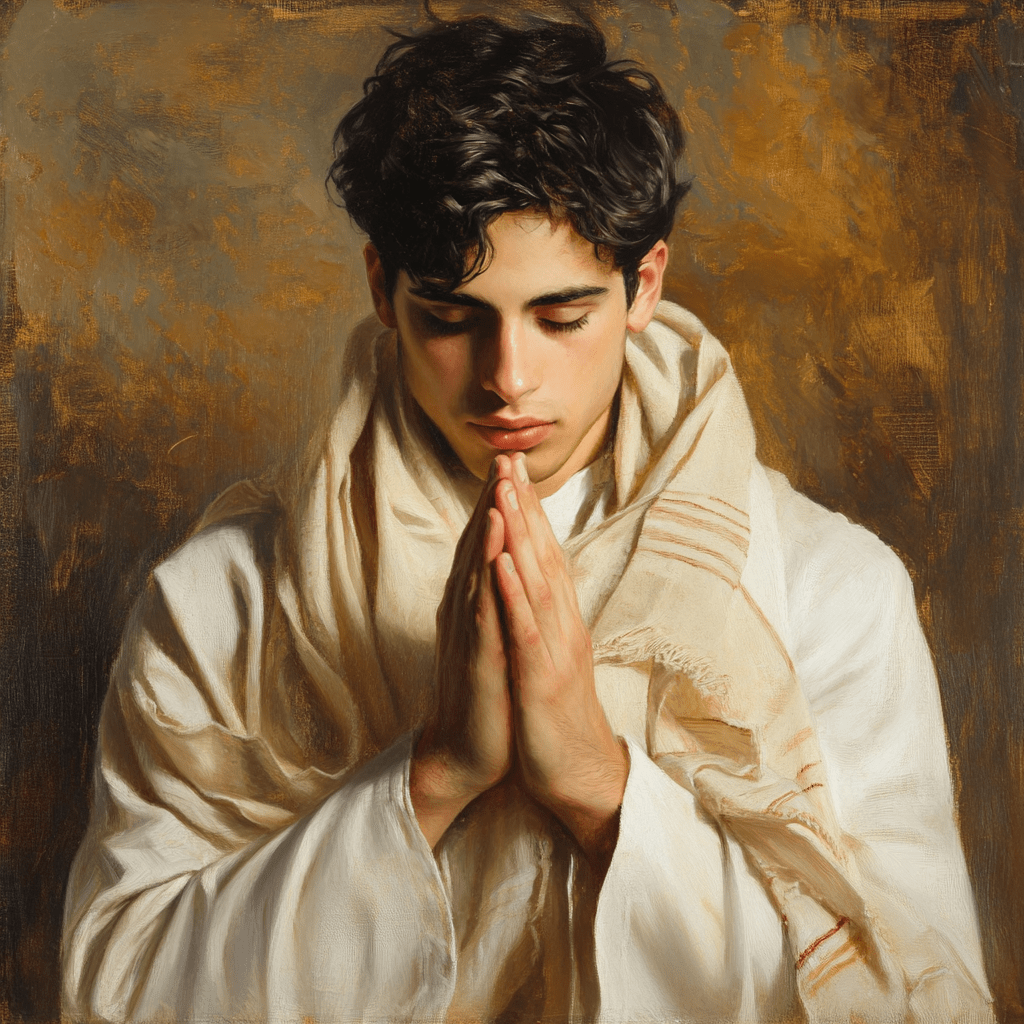
Nephi doesn’t use the word “repentance” here. What he does instead is model it. He prays. He wrestles. He seeks to understand the mysteries of God. He puts himself in a posture of humility. Then, he receives a promise—and it changes how he speaks to his brothers.
This isn’t just personal growth. It’s a covenant return.
The invitation is clear. Not only for Nephi’s family, but for us.
Scriptures to study:
- 1 Nephi 2:16–20 – Nephi’s personal prayer and promise
- 1 Nephi 3:6–8 – His immediate obedience and willingness to act
- Mosiah 2:9–22 – King Benjamin teaching about humble submission and covenant loyalty
Returning Looks Like This

Ancient Israel didn’t treat repentance as a last resort. It was part of the rhythm of life with God. Turning back to Him wasn’t shameful—it was sacred. These ten days weren’t about public guilt or private despair. They were about stepping away from pride, remembering the covenant, and aligning your heart with heaven again.
What made this season so powerful wasn’t just the spiritual intent—but the collective experience. Everyone in town knew that everyone else was a sinner. And no one pointed fingers. Instead, they looked inward. They asked for mercy. They softened their hearts. And because the whole community was doing it together, there was strength in the turning. There was unity in the humility.
Can you imagine what it would feel like if even one city today dedicated ten days to asking forgiveness from God—and from one another? The healing would ripple through homes, churches, neighborhoods. The honesty. The lifting. The peace.
That’s what these ten days were for. A focused season of self-examination and reconciliation. Not to punish—but to restore. To lighten. To lift.
And that’s what Nephi offers us.
Not a sermon.
A lived example.
He turned to the Lord—even when no one else in his family did. Sam eventually joined him, but for a while, Nephi stood alone. His repentance drew a line in the sand, one that eventually set him apart from his older brothers. It didn’t have to be that way—but it was. And still, Nephi stayed true. He chose God, even when it cost him something.
Scriptures to study:
- Hosea 14:1–9 – A prophetic invitation to return to the Lord
- Alma 5 – A soul-searching call for self-examination and spiritual renewal
- Mosiah 26:29–30 – God’s repeated invitation to forgive and be forgiven
- Helaman 3:35 – The power of humility and yielding to the Spirit
Teshuvah Still Has Power
You don’t have to be perfect to begin again.
You don’t have to have all the answers to start asking the right questions.
And you don’t have to wait for a holy day to return to the covenant. The path of repentance is open—and it always leads home.
Scriptures to study:
- Ether 12:27 – Weakness can become strength through grace
- Doctrine & Covenants 58:42–43 – The promise of full forgiveness
- Isaiah 1:18 – “Though your sins be as scarlet…”
- 2 Nephi 2:6–8 – Redemption through the Messiah, the source of true return
Looking for a deeper way to study the Book of Mormon?
The Revelation Habit is a free guide to help you read with purpose and see the scriptures through seven meaningful lenses.
It’s available here if you want to take a look.






 Feasting with Nephi
Have you ever thought about this scripture this way? Share your thoughts!