Happy Easter, friends!
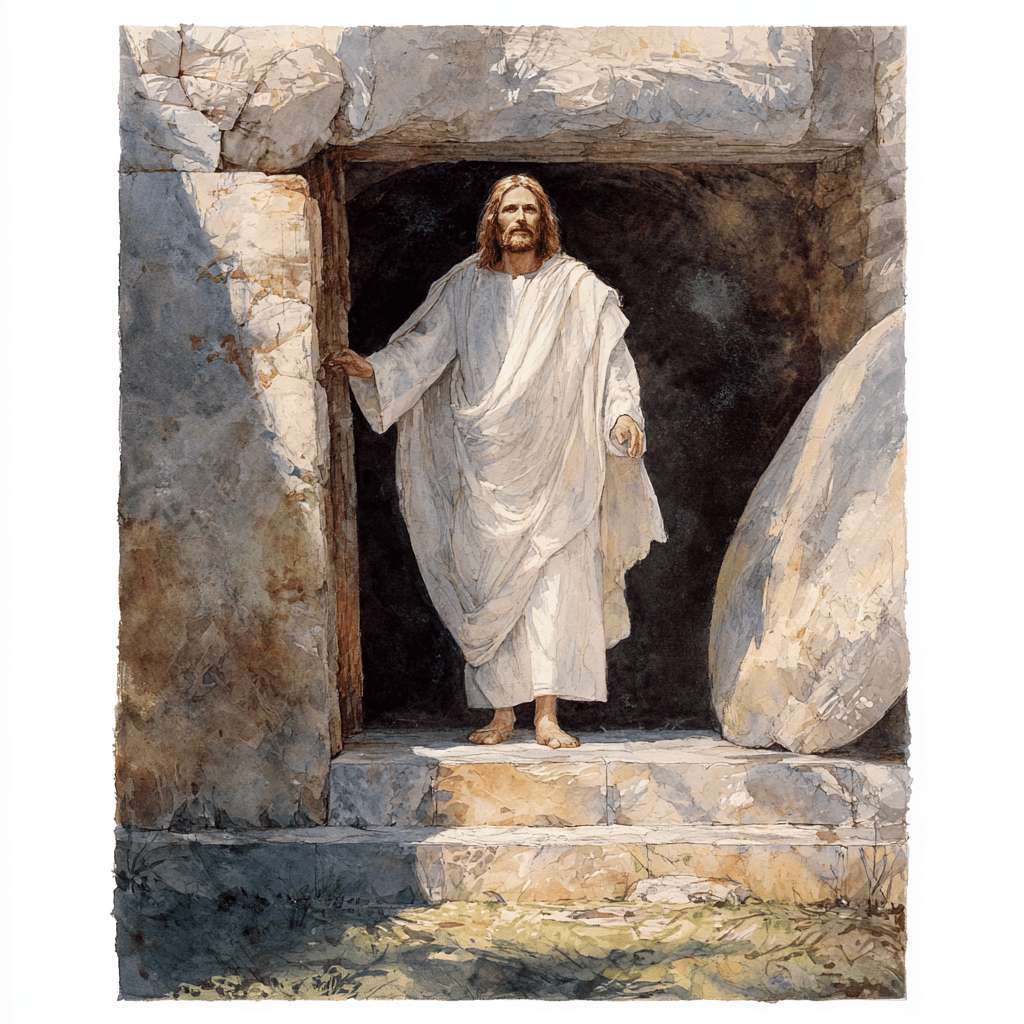
Since we are smack in the middle of the Easter season, I thought it would be the perfect time to talk about something that has been sitting on my heart for a while now: a Passover story hiding in plain sight in the Book of Mormon.
Not just any Passover story. A Passover story with a twist ending that is going to make you grab your Book of Mormon and read Mosiah 19 all over again, this time with Passover glasses on.
A Quick Note About How Storytellers Use Patterns
Before we dive in, I want to give you a little context about why ancient scripture writers used patterns.
Storytellers and scripture writers use patterns for several reasons:
First, by referencing or echoing a previous story, a writer can imply that story’s entire lesson without having to re-explain it. Think of it like a shortcut to deep teaching.
Second, by tweaking elements of a familiar story, a writer can teach new lessons through the differences, including twist endings. (More on that in a moment.)
Third, the lessons learned from the first story transfer naturally into the second, and the second one reinforces them all over again.
Fourth, and this is huge for people writing on gold plates with limited space, referencing a first story while telling a second one accomplishes all of the above while saving significant room on those sacred plates.
So when you read the Book of Mormon and something feels familiar, pay attention.
A (Very Brief) Introduction to Passover
For those of you who need a quick refresher, here is the short version of what Passover is all about.
The Israelites had been enslaved in Egypt for generations. God sent Moses to Pharaoh to demand their release, and Pharaoh, being Pharaoh, said no. Repeatedly. So God sent ten plagues upon Egypt, each one more devastating than the last. The tenth and final plague was the death of every firstborn son in the land of Egypt, from Pharaoh’s household all the way down to the prisoners in the dungeon and their livestock(Exodus 12:12).
But God made a way for His people to be protected. He instructed Moses to tell the Israelites to take a lamb without blemish, slaughter it at twilight, and paint the blood on the lintel and doorposts of their homes (Exodus 12:7, 21-22). Then the Lord would pass through Egypt to bring judgment, but when He saw the blood on the doorposts, He would pass over that house. As Exodus 12:23:
“For the LORD will pass through to smite the Egyptians; and when he seeth the blood upon the lintel, and on the two side posts, the LORD will pass over the door, and will not suffer the destroyer to come in unto your houses to smite you.”
The celebration of Passover is a celebration of the destroying angel passing over the firstborn of Israel because of the blood of the lamb on the doorposts.
Now here is the part I want you to tuck into the back of your brain, because we are coming back to it. God was very clear about His purpose throughout the plagues. This was not just about freeing His people. In Exodus 7:5, the Lord told Moses:
“And the Egyptians shall know that I am the LORD, when I stretch forth mine hand upon Egypt, and bring out the children of Israel from among them.”
God wanted Pharaoh and all of Egypt to know, without any question, who He was. That message, “Know that I am the Lord,” is the hinge on which our twist ending swings.
Now Let’s Talk About Mosiah 19
Here is your Passover story you didn’t know was a Passover story.
In Mosiah 19, the wicked King Noah is in serious trouble. His people are in chaos, his army has been depleted, and a very angry, though righteous man named Gideon has drawn his sword and is trying to kill him. The king runs, Gideon chases him, and the king climbs a tower near the temple. Things are not looking good for Noah. He is, quite literally, about to be destroyed.
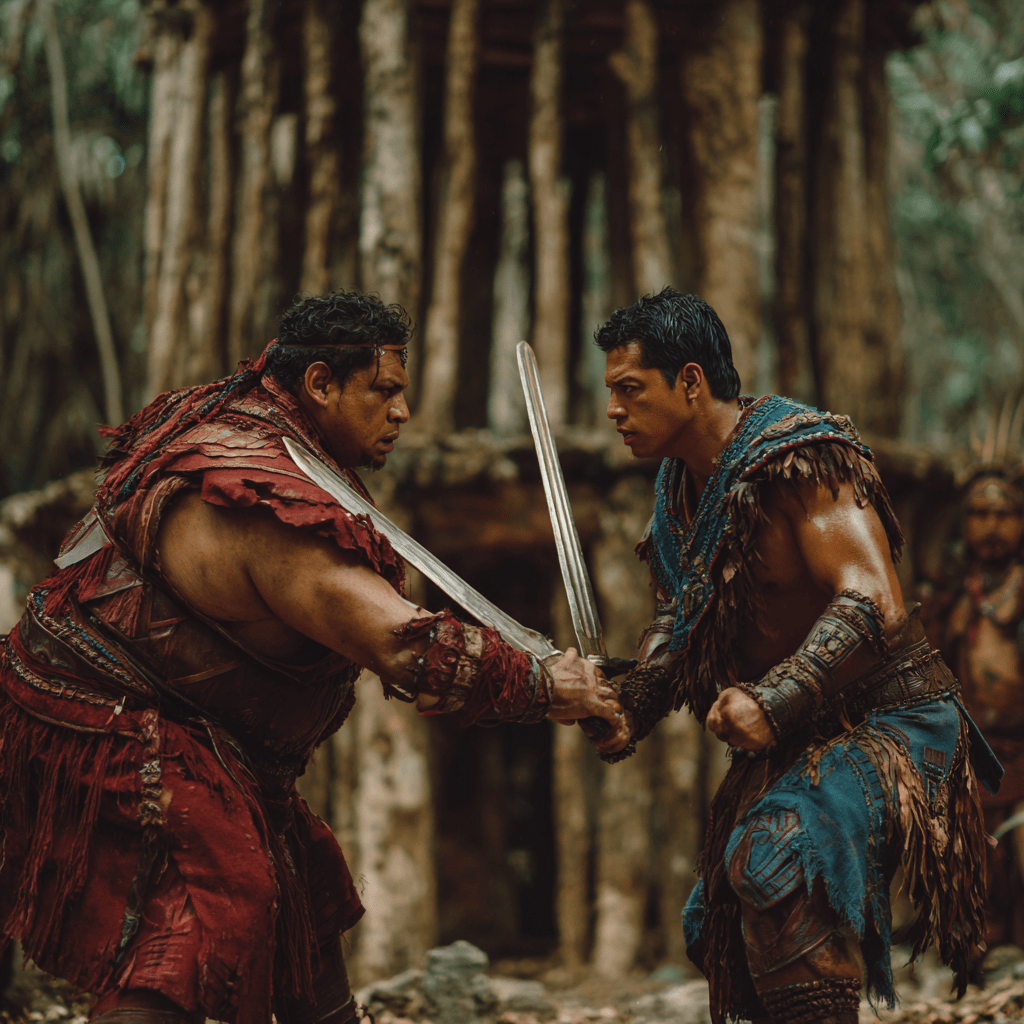
And then something saves him from destruction. It wasn’t faith and prayer and the arm of the Lord stretched out in power. What saves King Noah in that moment is Gideon’s mercy. Gideon looks out from the tower, sees the Lamanite army approaching, and chooses to spare the king’s life so that the people might have a chance to flee (Mosiah 19:7-8).
Then the Lamanites pursue the fleeing people and begin to slay them. Now the people are on the verge of destruction. And again, they are saved. Not by God. By the fair daughters of the Nephites standing before the Lamanite army and pleading for their lives, so that the Lamanites were charmed by their beauty and showed compassion (Mosiah 19:13-14).
Do you see the pattern? The people face destruction and, just like the first born of Isreael, they are passed over and spared.
Except for one very important thing.
There is no hand of God in this story.
The Israelites were saved by the blood of the Lamb, applied to their doorposts as instructed by God who told them exactly what to do and promised to protect them. The people of King Noah were saved by Gideon’s mercy and a group of brave daughters. Every rescue in Mosiah 19 is performed by the people themselves. God is heartbreakingly absent from this Passover story.
Which sets the stage for the twist.
The Twist Ending
Here is what happens at the end of Mosiah 19: the people are put into bondage.
That is right. The Lamanites make a deal with the people: They can keep their lives and their land, but they will pay half of everything they own as tribute to the Lamanite king every single year (Mosiah 19:15). They go from being free people to being a tributary people under a foreign king.
In the original Passover, because God was involved, because the people looked to the Lord, because there was a Lamb whose blood covered them, the result was freedom. In this Passover, because the people were led by a wicked king who did not look to the Lord, because there was no lamb and no blood and no faith, the result was bondage.
Talk about a twist ending.
Remember what God said to Pharaoh? “The Egyptians shall know that I am the LORD.” That was the whole point. Had King Noah been a righteous king, had the people of Nephi remembered the Lord, we might have had a very different story. The Lord might have stretched out His hand. The Lamanites might have been turned back. The people might have been set free.
But they did not remember. And so instead of a Passover that ends in liberation, they got a Passover that ends in chains.
The twist is the lesson. The absence of God is bondage.
But Wait, Don’t Panic: Here Comes the Feast of Unleavened Bread
Okay, I know that ending feels heavy, and I do not want to leave you sitting there without hope. Because right after Passover comes the Feast of Unleavened Bread, and that feast is about God swooping in to save His people and take them out of Egypt for good.
Here is the quick version: after the tenth plague and the original Passover night, the Israelites fled Egypt in such haste that their bread did not have time to rise (Exodus 12:34). That is why the feast is celebrated with unleavened bread. They were moving fast because God was moving on their behalf.
The Israelites were trapped, the Egyptian army was behind them, and there was nowhere to go. And God told Moses, essentially, hold out your staff and watch what I do (Exodus 14:15-16). The sea parted. The Israelites crossed on dry ground. The Egyptian army followed them in and was completely destroyed when the waters returned (Exodus 14:21-28). The people did not have to fight for their freedom. They did not have to bargain for it or use their daughters for it. The Lord did it for them.
The Feast of Unleavened Bread is a celebration of God saving His people when they could not save themselves.
Enter King Limhi, and Enter Gideon (Again!)
Now we have a new king on the throne. His name is Limhi, and he is Noah’s son.
(Sidenote: Is it not interesting that the original Passover was specifically about the firstborn male child, and here we have a male child stepping up to take the throne? The text does not come right out and say he is the oldest, but the fact that the kingdom is conferred upon him implies it pretty strongly. The pattern holds.)
Limhi knows his father was wicked. He is described as a just man himself, and he is working to bring his people back to the teachings of Abinadi and into the fold of God (Mosiah 19:17).
And who shows back up in Mosiah 22? Our old friend Gideon, who once chased a wicked king up a tower, now comes before Limhi with a plan to get his people out of bondage.
Here is the plan: they send wine as a tribute, make sure the guards drink plenty of it, and then sneak the entire population of their city out through the back pass in the dead of night (Mosiah 22:6-8).
(Sidenote: Look at the parallel here. The Israelites passed through the waters of the Red Sea on dry ground, the sea itself acting as a gateway from bondage to freedom, taking their flocks and their herds and all of their possessions with them (Exodus 14:22, Exodus 12:38). The people of Limhi passed through a back gate in the dead of night, from bondage to freedom, taking their flocks and their herds and all of their gold and silver and precious things with them (Mosiah 22:8, 22:12). A gateway through water. A gateway through a wall. Both groups walked through the door God opened for them and came out the other side free.)
Limhi hears the plan and agrees. Every single person makes it out. No battle. No bloodshed. Not one life lost.
Does that sound familiar? Because it should.
This is the Feast of Unleavened Bread. This is the answer to the Passover story that went wrong. This time, there is a righteous king. This time, there is faith.
So What Does All of This Mean for Us?
It means that the message of Easter is the same message that has been woven into scripture since Moses painted blood on a doorpost in the dark.
Remember the Lord your God.
When we forget Him, we end up in bondage, relying on our own cleverness and the mercy of our enemies. When we remember Him, He parts the sea. He walks us out of slavery and into the promised land without losing a single one of us who will follow Him along the way.
The blood of the Lamb on the doorpost points forward to the blood of Jesus Christ, who is our Passover (1 Corinthians 5:7). The whole pattern, from Exodus to Mosiah, is pointing us to Him.
Happy Easter, friends. Remember the Lord. He is very much in the business of twist endings.
All scripture references are from the King James Version of the Bible and the standard edition of the Book of Mormon.




 Feasting with Nephi
Have you ever thought about this scripture this way? Share your thoughts!