On the eighth day, Mary and Joseph brought Jesus to the temple.
They came to fulfill the law—to circumcise their son, to present Him as a firstborn male consecrated to the Lord, to offer the sacrifice required of new parents (Luke 2:21-24).
And two prophets were waiting.
Simeon spoke of deliverance—death passing over, peace granted, exodus finally here.
Anna spoke of redemption—sustained purity, daily dependence, thanksgiving for freedom.
Two prophets. Two feasts. Both fulfilled in the infant they held and blessed.
Simeon: The Passover
Simeon had been waiting for “the consolation of Israel” (Luke 2:25). The Holy Ghost had revealed to him that he wouldn’t see death before he saw the Lord’s Messiah. And when Mary and Joseph walked into the temple carrying their eight-day-old son, Simeon knew.
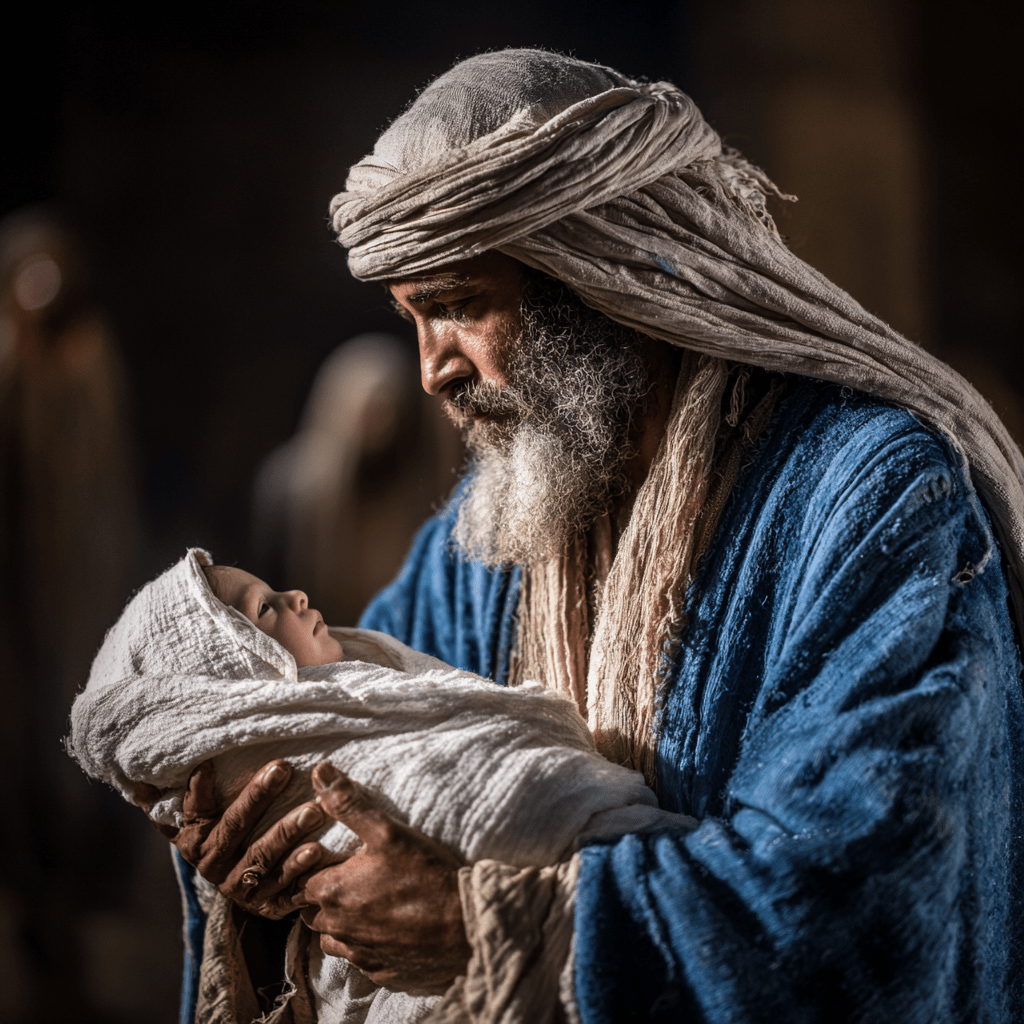
He took Jesus into his arms and said:
“Lord, now lettest thou thy servant depart in peace, according to thy word: For mine eyes have seen thy salvation, which thou hast prepared before the face of all people; A light to lighten the Gentiles, and the glory of thy people Israel” (Luke 2:29-32).
Every word echoes Passover.
Death Passing Over
“Thou shalt not see death” (Luke 2:26). The promise given to Simeon was a Passover promise: death would pass over him until he’d seen the Lamb.
On the night of the first Passover, the angel of death moved through Egypt, striking every firstborn son. But when the angel saw blood on the doorposts, death passed over that house. The blood of the lamb protected those inside (Exodus 12:12-13).
Simeon held the Lamb.
“Depart in Peace”
“Now lettest thou thy servant depart in peace” (Luke 2:29).
This is exodus language. Moses said to Pharaoh, “Let my people go” (Exodus 5:1). After the Passover, after the lamb was slain and the blood applied, Pharaoh finally released them: “Rise up, and get you forth from among my people… and be gone” (Exodus 12:31).
Simeon had been held in this life by God’s promise. Now, having seen the Passover Lamb, he could depart— cross over, go home in peace.
Fasting and Prayer: Daily Manna
Anna “served God with fastings and prayers night and day” (Luke 2:37).
This is the pattern of manna in the wilderness. Israel couldn’t hoard it. They couldn’t store it up. They had to gather fresh manna every morning, trusting that God would provide again the next day (Exodus 16:4, 19-20).
Anna’s fasting and praying mirrored that daily dependence. She couldn’t rely on yesterday’s prayer. She couldn’t store up spiritual provision. She had to come to God every day, every night, trusting Him to sustain her through one more day of widowhood, one more day of waiting, one more day of serving in the temple.
Giving Thanks: Miriam’s Song
When Anna saw Jesus, she “gave thanks likewise unto the Lord” (Luke 2:38).
After Israel crossed the Red Sea—after the Passover deliverance, after the escape from Egypt—Miriam the prophetess took a timbrel and led the women in a song of thanksgiving (Exodus 15:20-21). She sang of God’s victory, of Pharaoh’s horses and riders thrown into the sea, of the triumph that came after the terror.
Anna was a prophetess, like Miriam. She’d lived through her own long journey, her own years of trusting God through barrenness and loss. And when she saw the fulfillment, she gave thanks.
Speaking of Redemption
Anna “spake of him to all them that looked for redemption in Jerusalem” (Luke 2:38).
Anna spoke of redemption—the ongoing work of God buying back His people, sustaining them through the wilderness, bringing them home to the land of promise.
Passover saved them from immediate death. Unleavened Bread sustained them through the long journey home.
When Anna saw Jesus, she proclaimed that this child would not just deliver us from death—He would redeem us through the wilderness, sustain us with daily bread, and bring us all the way home.
Two Feasts, One Salvation
Simeon and Anna testified together because we needed both testimonies.
That’s what Anna and Simeon gave us. That’s what Luke preserved.
Next in the series: From eight days old to twelve years old. From barley sheaf to bread of life. Jesus grew, and Luke shows us the final feast pattern—First Fruits and Shavuot, the harvest that began with a tender offering and ended with the Bread of Life teaching in His Father’s house. Subscribe to see the pattern complete.





 Feasting with Nephi
Have you ever thought about this scripture this way? Share your thoughts!