Luke puts everyone outside.
The shepherds were “abiding in the field, keeping watch over their flock by night” (Luke 2:8). No walls. No roof. Just open sky and stars overhead.
Mary and Joseph couldn’t find room in the inn, so they ended up in a stable—likely with gaps in the roof, open to the night air (Luke 2:7).
And suddenly, glory blazed around them all. Angels filled the sky. The shepherds saw heaven opened. The Holy Family sheltered under stars while divinity announced itself.
Luke uses these details to move us from the Day of Atonement imagery into Sukkot imagery.
What Is Sukkot?
Sukkot commanded Israel to leave their homes for seven days and live in temporary shelters—booths with roofs made of branches, loose enough that you could see stars through the gaps (Leviticus 23:42-43).
The whole point was vulnerability. You couldn’t control the weather. You couldn’t lock the door. You were exposed, dependent, trusting God alone for protection while you slept under the sky.
Israel celebrated Sukkot to remember the wilderness years when they lived in tents, following a pillar of cloud by day and fire by night. They had no permanent home, no city walls, no security—just God’s presence leading them forward.
And Luke shows us the birth of Jesus wrapped in Sukkot imagery.
“No Room for Them in the Inn”
When Mary and Joseph arrived in Bethlehem, “there was no room for them in the inn” (Luke 2:7).
We often read this as rejection—the world had no space for the Savior, so He was born in a stable. But Luke might be showing us something else: the Holy Family joined the pattern of Sukkot. They ended up outside, in a temporary shelter, under the open sky.
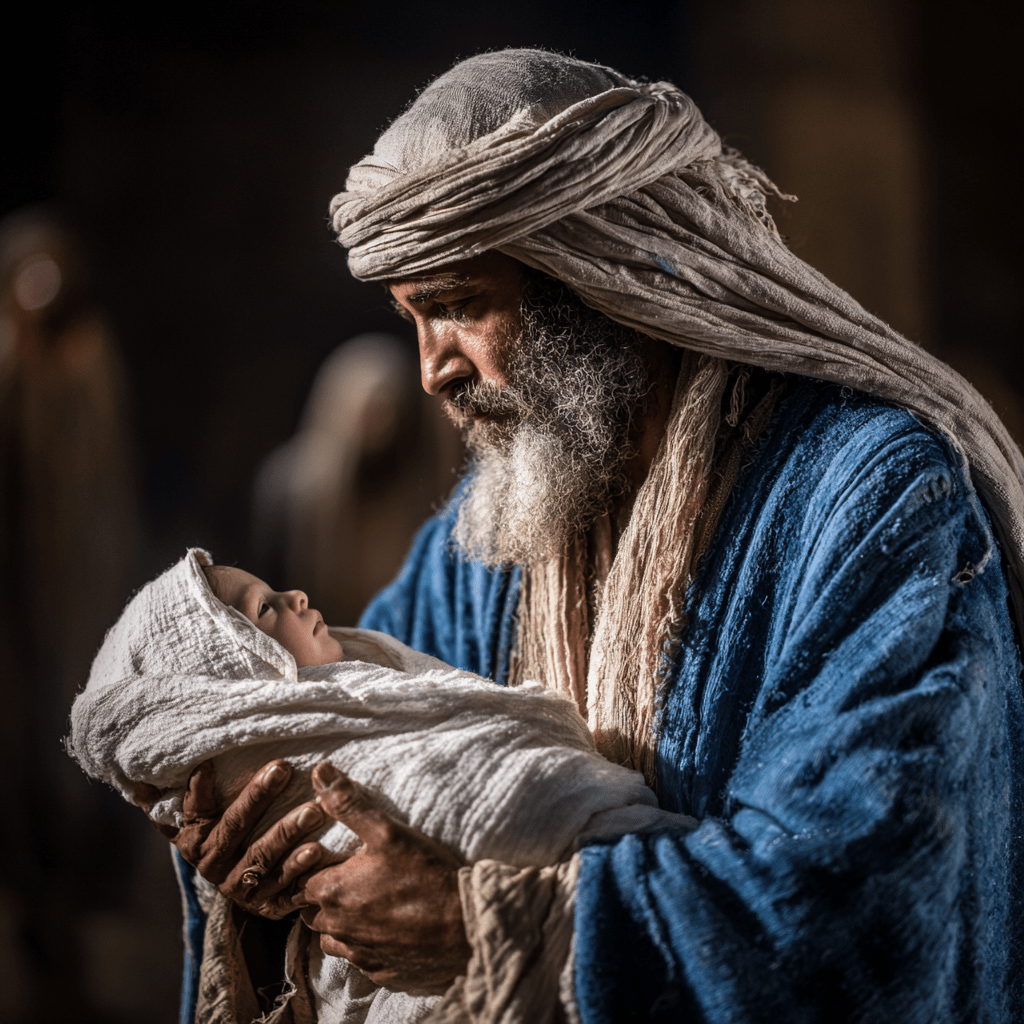
Mary gave birth in a place that probably had an open roof, exposed to the elements, vulnerable to the night. She wrapped her son in white cloth and laid Him in a manger—a feeding trough for animals, rough-hewn wood, nothing permanent or secure.
They were living Sukkot. Dwelling in a temporary place. Trusting God to shelter.
The Shepherds in the Field

The shepherds were already living the pattern.
“Abiding in the field” (Luke 2:8) meant they were outside, probably sheltered only by rough booths they’d constructed for the lambing season—temporary structures with open roofs, exactly like the sukkot Israel built during the feast.
They were keeping watch over their flocks at night, exposed to weather and danger, trusting God to protect both them and the animals in their care.
And then the glory of the Lord shone around them (Luke 2:9).
The Shekinah cloud—the visible presence of God that led Israel through the wilderness, that filled the tabernacle, that rested over the temple—appeared to shepherds living in booths during the season of Sukkot.
God’s presence dwelt with those who dwelt in temporary shelters, just as He had promised: “I will dwell among the children of Israel, and will be their God. And they shall know that I am the Lord their God, that brought them forth out of the land of Egypt, that I may dwell among them” (Exodus 29:45-46).
The Shepherds’ Crooks as Lulav
During Sukkot, worshipers would wave the lulav—a bundle made from palm, myrtle, and willow branches bound together. The lulav represented dependence on God, guidance through uncertain paths, and the instruments that shepherds used to lead their flocks.
The shepherds carried their own version: crooks and staffs, the tools they used to guide sheep through dangerous terrain, to pull them back from cliffs, to defend them from predators.
When the shepherds went to Bethlehem, they carried these staffs with them—their lulav, their instruments of guidance. And they came to see the Shepherd, the one who would say, “I am the good shepherd: the good shepherd giveth his life for the sheep” (John 10:11).
Mary Pondering in Her Heart
Luke tells us that Mary “kept all these things, and pondered them in her heart” (Luke 2:19).
During Sukkot, worshipers held the etrog—a citrus fruit that represented the heart.
Her heart was the etrog. Her son was the offering.
What Nephi Saw in Vision
In 1 Nephi 11, Nephi saw in vision what the shepherds saw in person.
He saw “a virgin, most beautiful and fair above all other virgins” (1 Nephi 11:15). He saw her “carried away in the Spirit” and then “bearing a child in her arms” (1 Nephi 11:19-20). He saw the Lamb of God, the Son of the Eternal Father, announced by angels.
What the shepherds witnessed under the stars near Bethlehem, Nephi witnessed in prophetic vision. The same glory. The same announcement. The same revelation of who this child was and what He came to do.
Nephi saw the Sukkot moment—the tabernacling of heaven with earth, the dwelling of God among His people—and he recorded it using the same feast pattern Luke would later use in his gospel. His vision is a part of the Sukkot section of 1 Nephi.
Heaven Dwelling With Earth
Sukkot celebrated the truth that God didn’t stay distant. He came down. He dwelt in tents with His people in the wilderness. He filled the tabernacle with His presence. He led them with cloud and fire.
And on the night Jesus was born, He did it again.
The Word became flesh and “dwelt among us” (John 1:14)—and the Greek word for “dwelt” is literally “tabernacled.” He pitched His tent with ours. He lived in temporary, vulnerable human flesh. He sheltered under the same sky, breathed the same air, experienced the same exposure to weather and danger and uncertainty.
Luke shows us the birth as Sukkot because that’s what it was: God dwelling with us in the most literal, physical, vulnerable way possible.
The feast pattern was fulfilled. Heaven tabernacled with earth. And the glory of the Lord shone around them all, just as it had in the wilderness, just as it had at the temple dedication, just as it always did when God chose to dwell with His people.
That’s why Luke put everyone outside. That’s why the shepherds were in the fields. That’s why there was no room in the inn.
Because Sukkot required vulnerability. It required trust. It required dwelling in temporary places while God’s presence blazed around you, protecting and guiding and filling the night with glory.
Next in the series: On the eighth day, they brought Jesus to the temple. And there, two prophets spoke—Simeon proclaiming deliverance, Anna proclaiming redemption. One feast led to another: Passover and Unleavened Bread. Subscribe to hear what they said and why it mattered.




 Feasting with Nephi
Have you ever thought about this scripture this way? Share your thoughts!