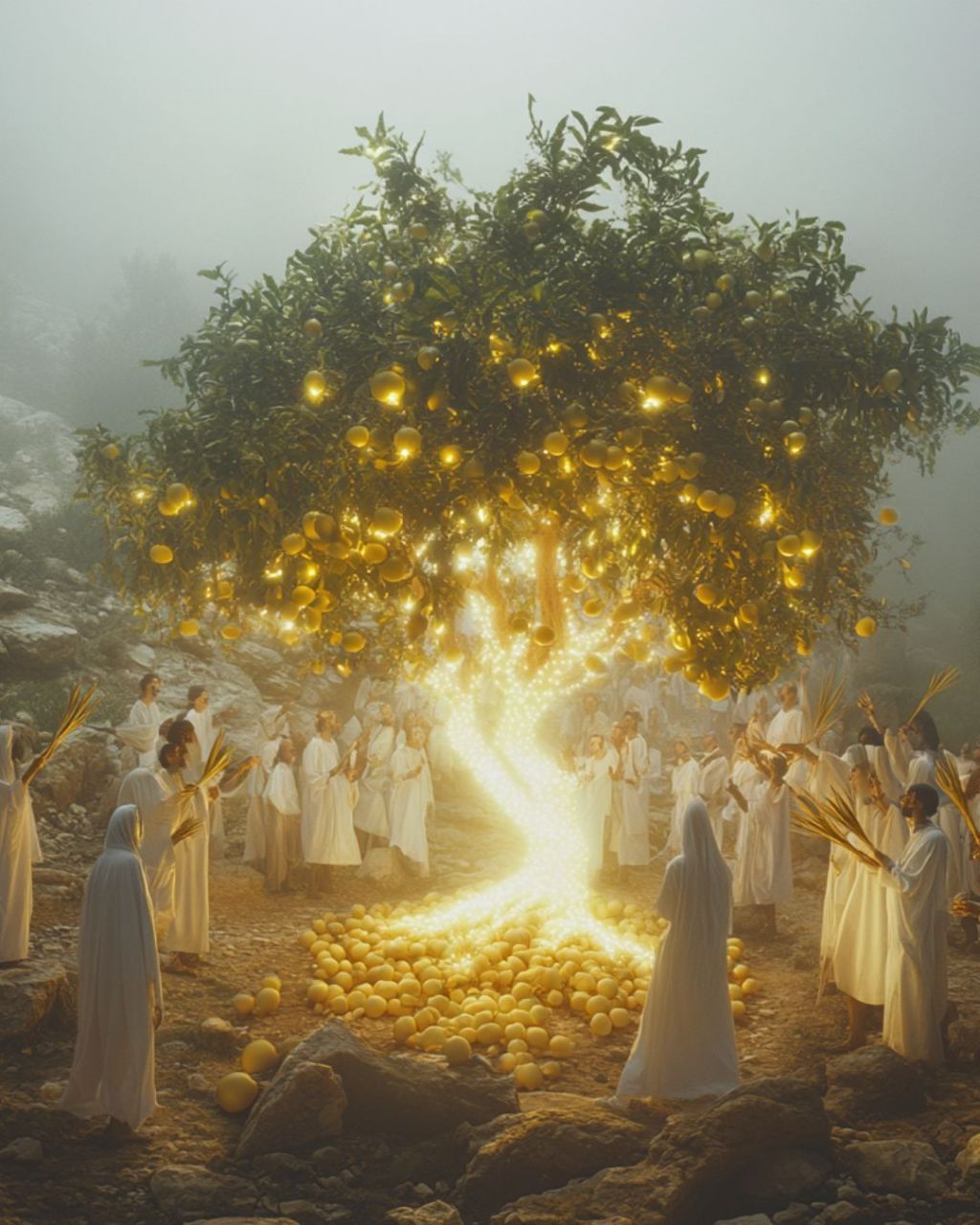
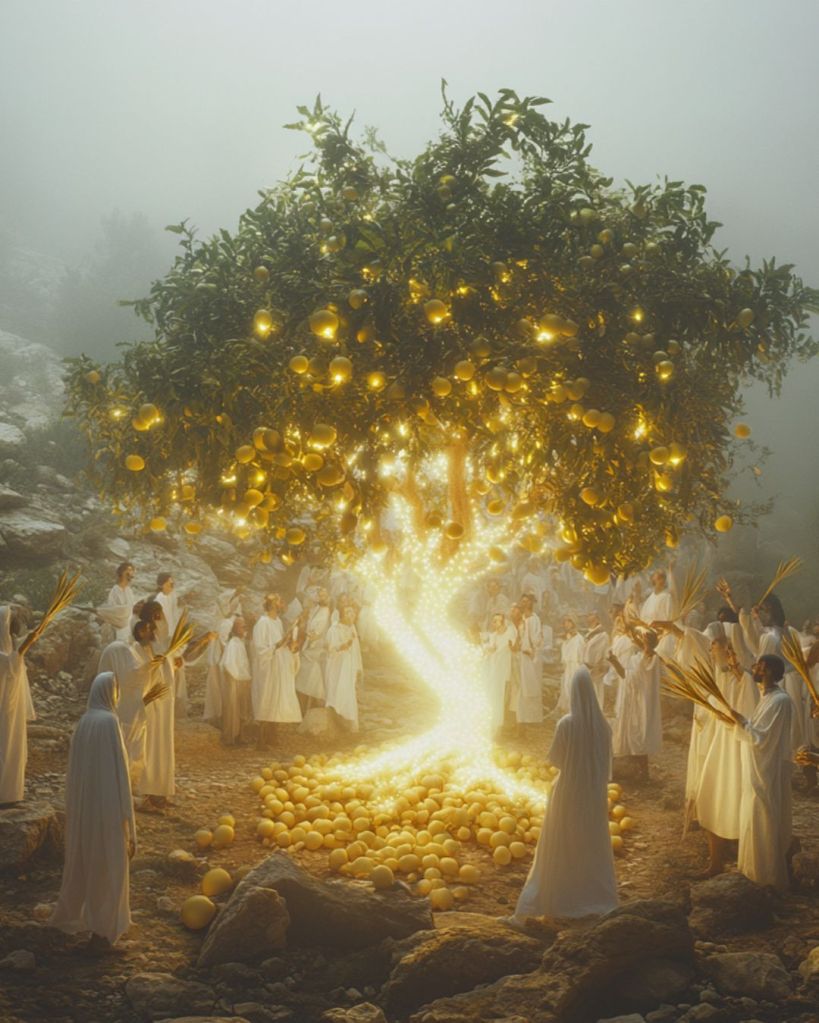
You’ve read Lehi’s vision before. Maybe even taught it a dozens of times. It’s one of the most well-known moments in the Book of Mormon. Children draw it. Youth act it out. Adults teach it every four years in Sunday School. And for good reason—it’s powerful. It’s rich. It’s filled with imagery we instinctively feel is sacred: fruit, light, mist, darkness, a path, a tree.
But the reason Lehi’s vision feels so familiar might not be what you think.
It’s familiar because your spirit recognizes something deeper. Lehi’s vision echoes a sacred pattern woven into the fabric of temple worship. It speaks the language of ancient feasts, covenant journeys, and temple drama.
Let’s walk through it together.
The Interpretation You Already Know (And Why It’s Only the Beginning)
If you’ve grown up with the Book of Mormon, you likely already know the basic symbolism. The tree represents the love of God. The fruit is desirable above all things. The iron rod is the word of God. The mist of darkness is temptation. The great and spacious building is the pride of the world¹.
These interpretations are true. They are doctrinally sound. Nephi is an incredible writer with truth at every level. But if you want to go deeper than what you’ve known your whole life, you have to see this through Nephi’s eyes. He goes out of his way to embed within the vision in a much larger structure: one built on the back of Israel’s holiest feast days.
The Festival That Frames the Vision

Feast of Tabernacles—also called Sukkot.
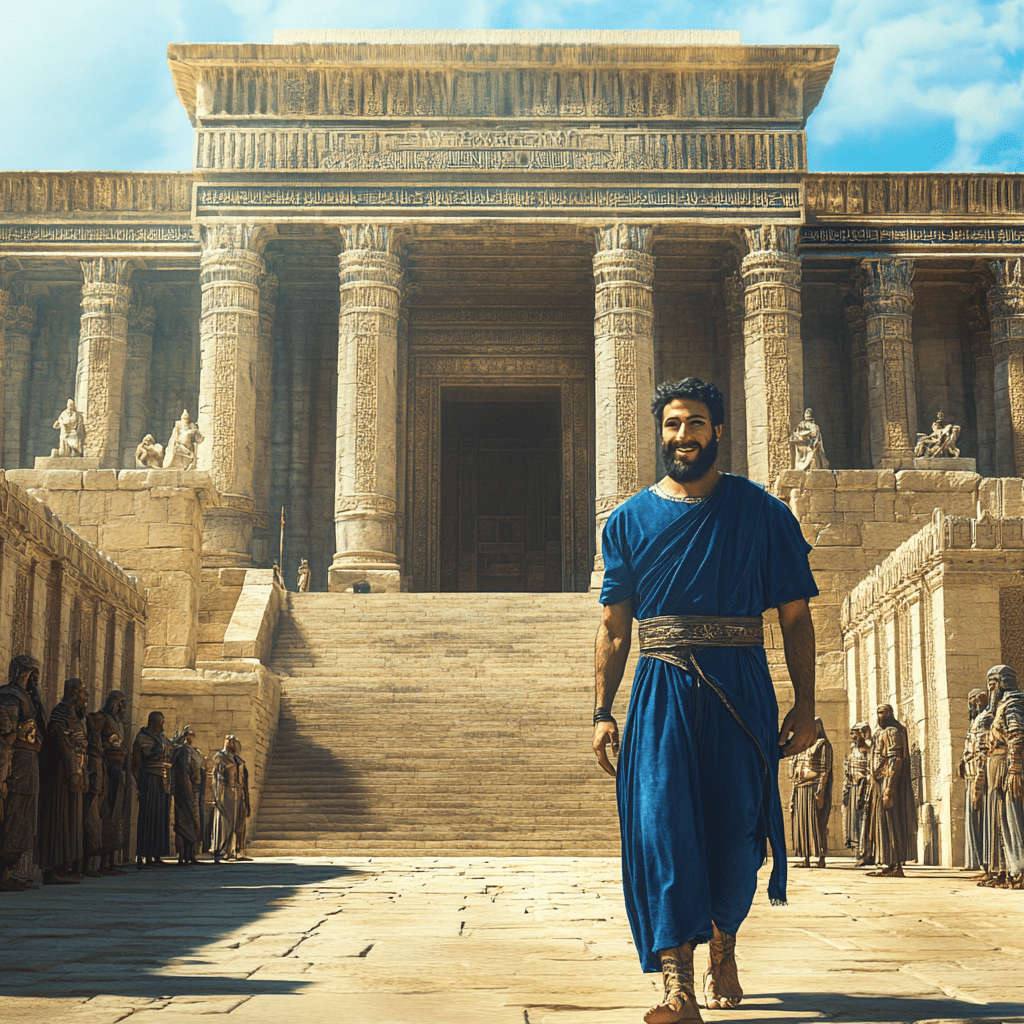
Sukkot was no ordinary feast. Celebrated at the temple in Jerusalem, Sukkot commemorated the Israelites’ time in the wilderness and their ultimate arrival in the promised land. It was a time of water rituals and temple processions. People lived in temporary shelters, or “booths,” to remember their dependence on God.
And all of those elements show up, almost point for point, in Lehi’s vision.
There’s a man in white robes who guides Lehi through a wilderness. There’s a river. A rod of iron. A tree. Fruit. Darkness. Glory. A great and spacious building.
These aren’t random dream fragments. They are symbols drawn directly from Israel’s covenant memory—their ritual life. Nephi, trained in the law of Moses and intimately familiar with temple worship, knew exactly what he was doing when he recorded this vision.
Seeing the Vision Through Ancient Eyes
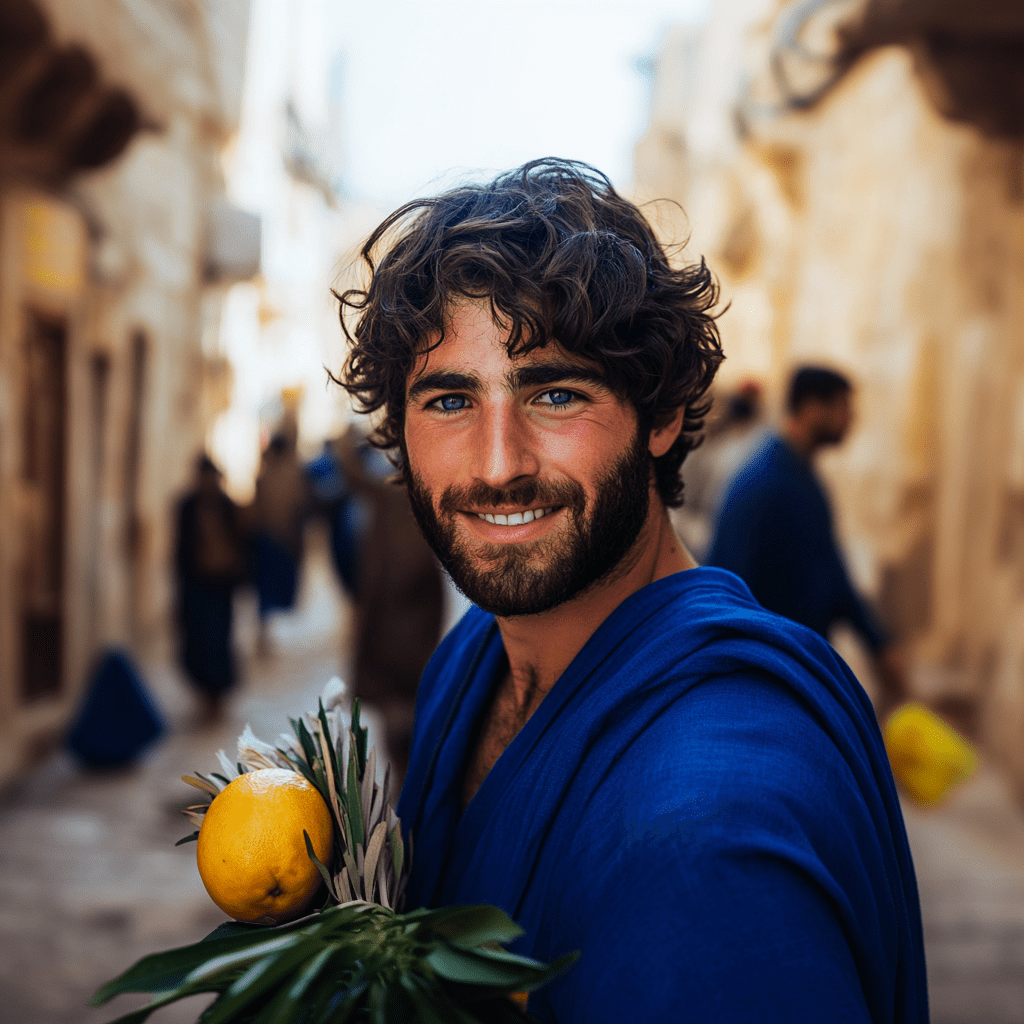
In ancient Israel, and even today, the etrog, a citrus fruit that’s sweet to the taste, is held in one hand during the Feast of Tabernacles. Rabbinic tradition later called it the “fruit of glory,” and it was associated with divine presence and favor².
The river Lehi sees initially seems like a symbol of life. That would make sense—in Sukkot, the priest would draw water from the Pool of Siloam and pour it on the temple altar as a plea for rain and spiritual renewal. Water was central to the feast. But Nephi later reveals that the river in his father’s vision was not clean. In fact, it was filthy, and many were drowned in it³. That inversion would have shocked ancient readers. A river that fails to give life? A water source that leads to death? Nephi is warning his people that not all water is sacred. Not all sources bring life. The inversion is an intentional warning against false teachers.
Even the iron rod—so familiar to modern readers—carries more depth than we often realize.
We’ve been taught to see it as the word of God, and Nephi confirms that⁴. But in the context of the Feast of Tabernacles, the rod may have echoed something even more specific to ancient Israelite worship: the lulav.
The lulav was a bundled branch, waved during the temple ceremonies of Sukkot. It consisted of a palm branch, two willow branches, and three myrtle twigs—tied together and lifted in all directions during prayers and processions. The waving in all directions symbolized having God surround them. Worshippers would carry it in their hands as they circled the altar, reciting psalms that praised God’s deliverance and pleaded for His continued presence. The motion was physical, directional, devotional. The lulav wasn’t just a symbol—it was an action.
Now return to Lehi’s vision: the iron rod is something people physically grasp. They don’t just admire it. They hold it, cling to it, follow it. It guides them through the mists of darkness. It’s not unseen help, it’s solid. It has heft. It’s tangible. Nephi’s telling us that God’s presence is tangible! He’s not unseen–He’s right there on the path and all you have to do is grab onto Him and hold on. He will get you to the tree.
In both the vision and the feast, participation requires persistence. It’s not enough to recognize the symbol. The blessings come to those who act—who grasp, who walk, who endure, who hold fast until they arrive at the place of glory.
The rod, like the lulav, is an invitation: move with intention. Worship with your whole self. Don’t just admire from a distance—take hold.
The Temple Pattern Beneath the Dream
(1 Nephi 1:6–14)
What makes this vision so powerful is not just the symbols themselves, but the structure of the vision. It moves like a temple journey:
- It begins in wilderness and chaos.
- It introduces opposition—darkness, confusion, mocking voices.
- It offers a narrow path—a guided, covenantal way forward.
- It climaxes at a place of glory—a tree shining with fruit, surrounded by joy.
That is not random.
That is the architecture of sacred experience. It mirrors the ancient movement of temple worship from the outer court to the Holy of Holies. It echoes Israel’s journey from Egypt to Sinai to Zion. It even aligns with the modern covenant path we walk today—one that begins in a fallen world and ends in a divine embrace.
This is why the vision is not just for Lehi. It’s not just a morality play. It’s your life in ritual form. It’s a map of how God guides covenant people from disorientation to revelation.
What This Means for You
When you start reading the Tree of Life visions in 1 Nephi with this pattern in mind, everything changes. Scripture becomes more than inspirational—it becomes architectural. It reveals the bones of divine worship, the scaffolding of ancient festivals and temple rites that prepared people to enter God’s presence.
And the best part?
These patterns aren’t locked in the past. They still operate. Still teach. Still lead.
The Lord preserved them for a reason. He knew that in a world full of spiritual noise, pattern recognition would be one of the most powerful ways to receive personal revelation.
So don’t stop at the familiar interpretation. Go deeper.
Ask questions like:
Where else have I seen this pattern?
What festival or ritual might this echo?
What inversion is the Lord using to teach me something unexpected?
Because the next time you read about a tree, a river, a rod, or a building, you might just be standing on sacred ground.
Ready to Go Deeper?
This is just the beginning. When you start seeing the Book of Mormon through ancient eyes, patterns begin to emerge—connections the modern mind skips, but the ancient reader would have recognized instantly.
You don’t need a theology degree.
You don’t need to learn Hebrew.
You just need a willingness to look again.
If this vision stirred something in you—like a sense that there’s more waiting in these pages—start with our free resource: “5 Hidden Connections in 1 Nephi.” It’s a simple guide that walks you through subtle patterns most readers miss—and why they matter for your personal revelation.
It’s not about proving the Book of Mormon is true.
It’s about letting it speak to you in ways it hasn’t before.
Get the free guide here and start your next read-through with eyes wide open.
Footnotes:
- 1 Nephi 11:25, 1 Nephi 15:23–24, 1 Nephi 11:36
- Leviticus 23:40; rabbinic interpretation in Sukkah 36b–37b
- 1 Nephi 12:16
- 1 Nephi 8:5–7






 Feasting with Nephi
Have you ever thought about this scripture this way? Share your thoughts!